
Data Centers
Data center operations run on precision, discipline, and an unwavering commitment to keeping critical infrastructure online - yet attracting and retaining the right talent for these roles remains one of the industry's most persistent challenges. The work environment is demanding: 24/7 shift schedules, high-stakes decision-making, and zero tolerance for error create conditions that not every candidate is equipped to handle. Organizations that lack clearly defined competency expectations struggle to identify the right candidates during hiring, often selecting for technical credentials alone while overlooking the behavioral and operational qualities that predict success in the role. Candidates who thrive in structured, mission-critical environments - whether they come from technical training programs, adjacent industries, or military service - are often the best fit, but only when organizations know what they're looking for and can articulate it clearly. Without that foundation, hiring becomes a guessing game and turnover follows. Building a talent strategy around well-defined competencies, realistic role expectations, and structured onboarding and development pathways gives data center operators a far stronger foundation for attracting candidates who are not only qualified on paper, but genuinely built for the demands of the work.

Assisted Living
Employee retention in the senior living industry improves when organizations position frontline roles as long-term careers rather than short-term jobs. This requires making advancement opportunities visible through clear career pathways, providing ongoing training and competency-based development, and showing employees how their skills can lead to promotions or movement into specialized clinical, leadership, or administrative roles. At the same time, retention depends on creating supportive workplace conditions- competitive wages, predictable scheduling, manageable staffing levels, and strong supervisor support- to reduce burnout. When these structural supports are paired with mentorship, leadership development, and a culture that recognizes the critical contributions of caregivers, senior living organizations can transform high-turnover positions into sustainable careers that attract and retain committed professionals.

Cybersecurity
Cybersecurity is one of the few fields where the credentialing landscape can feel as complex and fast-moving as the threats it exists to address. From CompTIA and CISSP to CEH, CISM, and dozens of vendor-specific certifications, organizations face a constant challenge in determining which credentials actually signal the competencies they need, which are table stakes for a given role, and which are simply noise. For job seekers and practitioners, the pressure to continually stack certifications can become a treadmill that prioritizes credential accumulation over genuine skill development. For employers, over-reliance on certifications as a proxy for competency can narrow the talent pool unnecessarily, screening out capable candidates who have developed their skills through experience, self-study, or non-traditional pathways. Meanwhile, the threat landscape continues to evolve at a pace that formal certification programs struggle to match, meaning that even a freshly credentialed hire may lack the specific competencies an organization needs most. Building a talent strategy around clearly defined role-specific competencies, rather than credential checklists alone, gives organizations a more accurate and flexible foundation for hiring, developing, and retaining the cybersecurity professionals they depend on.
Nuclear Energy
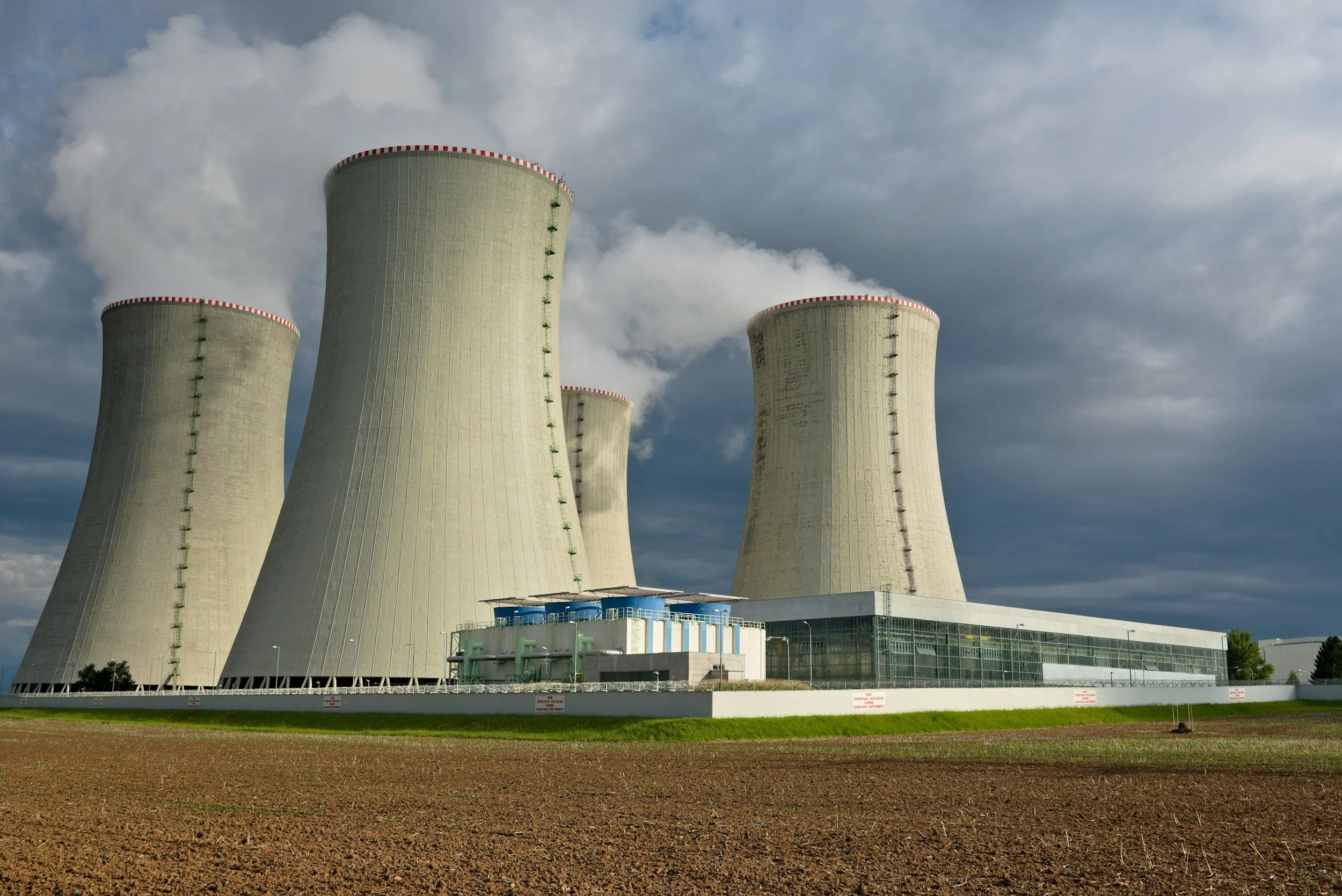
Few industries place greater demands on their workforce than nuclear energy. Plant operators, health physicists, nuclear engineers, and radiation protection technicians must navigate one of the most rigorous credentialing landscapes in any sector, combining federal licensing requirements, security clearances, extensive background checks, and ongoing training obligations that don't end once a worker is hired. These credentials take years to acquire, and the specialized knowledge required to perform safely in a nuclear environment is among the most difficult to develop and the most costly to lose. Yet the industry faces a compounding crisis: an accelerating wave of retirements is taking decades of irreplaceable institutional knowledge out the door, while the pipeline of credentialed candidates entering the field remains thin. Organizations that fail to invest in structured knowledge transfer, clearly defined competency frameworks, and deliberate succession planning risk losing not just people, but the expertise those people carry. Building a workforce strategy that accounts for the full credentialing journey is essential for any organization that cannot afford to get it wrong.

Skilled Trades
Shipbuilding
American shipbuilding is experiencing a moment of national urgency. After decades of declining investment and eroding industrial capacity, the federal government is now committed to rebuilding the domestic shipbuilding sector at scale - bringing with it an enormous and immediate demand for skilled workers that the current workforce pipeline is not equipped to meet. Welders, pipefitters, electricians, marine engineers, and production supervisors are needed in large numbers, yet many of these roles require years of specialized training and hands-on experience that cannot be accelerated overnight. The challenge is compounded by an aging trades workforce, limited vocational pathways into shipyard careers, and a generation of institutional knowledge that was never systematically captured or transferred. Rebuilding this industry isn't just a matter of funding facilities and equipment — it requires a deliberate, coordinated workforce strategy that defines the competencies needed at every level, builds the training and apprenticeship pipelines to develop them, and creates clear career pathways that make shipbuilding an attractive long-term profession for the next generation of American workers.

Retail: Front-Line Leadership
Large retail organizations rely heavily on frontline operational leaders - department supervisors, assistant managers, and shift leads - to drive customer experience, team performance, and store profitability. Yet these roles consistently experience some of the highest turnover in the industry. The demands are significant: frontline leaders are expected to manage large, diverse teams, hit operational targets, and solve problems in real time, often with little formal preparation for the transition from individual contributor to people leader. Without clear competency expectations, structured onboarding into leadership, or visible pathways for continued advancement, many capable employees either burn out or leave for opportunities that offer more support and growth. When organizations invest in defining what great frontline leadership looks like at every level, building development pathways that prepare high-potential associates before they step into leadership roles, and creating cultures that recognize and reward growth, they can transform one of their most vulnerable talent pools into a stable, high-performing foundation for the entire operation.
The skilled trades are facing a generational reckoning. As experienced electricians, welders, pipefitters, carpenters, and HVAC technicians retire in record numbers, the pipeline of qualified workers entering the trades has not kept pace - leaving employers, unions, and workforce development organizations scrambling to close a gap that grows wider every year. Apprenticeship programs remain the gold standard for developing trade-ready workers, combining on-the-job learning with technical instruction in a way that builds genuine competency over time. Many programs struggle to articulate the skills and competencies being developed at each stage, making it difficult to assess readiness, recognize progress, and connect apprentices to the full range of career opportunities available to them as they advance. When apprentices can see a clear path from entry-level learner to journeyman to master tradesperson - and understand what it takes to get there - they are more likely to complete their programs and commit to a long-term career in the trades. Organizations and programs that invest in well-structured competency frameworks, transparent progression criteria, and defined career pathways don't just produce more workers - they produce more engaged, committed professionals who see the trades not as a fallback, but as a career worth building.

Military
Veterans bring an exceptional foundation to the civilian workforce - disciplined, mission-driven, and experienced in high-stakes environments that demand both technical proficiency and sound judgment under pressure. Yet military hiring remains one of the most persistent translation challenges in talent management. The problem is rarely about capability. It's about alignment. Military occupational specialties don't map neatly onto civilian job titles, and without a structured framework for translating military experience into recognized civilian competencies, even the most qualified veteran can be mismatched to a role that underutilizes their skills or misrepresents their background. Employers who rely on job titles and traditional credentials alone will consistently struggle to identify, place, and retain veteran talent. The result is a costly cycle where veterans are hired into roles that don't fit, organizations fail to capture the full value of their experience, and promising employees disengage and move on. Building competency-based frameworks and crosswalks that can bridge military and civilian career pathways gives organizations a far more accurate foundation for evaluating veteran candidates, placing them in roles where they can contribute immediately, and developing clear advancement pathways that reflect the depth of experience they already carry.

Manufacturing
The manufacturing floor of tomorrow looks fundamentally different from the one most workers were hired into. Automation, robotics, and artificial intelligence are reshaping production environments at a pace that outstrips traditional workforce planning - creating roles that didn't exist five years ago and eliminating others that once defined the industry. Positions like robotics technician, cobot operator, and AI systems monitor are emerging across facilities, yet the talent pipelines, training programs, and competency frameworks needed to fill them reliably are still catching up. For many manufacturers, the challenge isn't just finding workers - it's knowing exactly what the future role requires, how to assess candidates for it, and how to build a development pathway that prepares today's workforce to grow into it. Organizations that wait until the roles are fully defined before investing in workforce strategy will find themselves perpetually behind. Those that take a proactive approach - mapping emerging skill requirements, building competency frameworks around the jobs of tomorrow, and developing internal pipelines that upskill existing employees alongside new talent - will be far better positioned to compete as the industry continues to evolve.